AI Collections Software for Multifinance Institutions in Indonesia
AI collections software built for Indonesian multifinance operations — audit-grade workflows, OJK-aligned design, and human-in-the-loop controls. See how
Why Collections Feels Different in Indonesian Multifinance
AI collections software for multifinance institutions in Indonesia sits in a genuinely difficult operating environment. Borrower portfolios are distributed across dozens of branches, often in areas with inconsistent connectivity. Field officers manage hundreds of accounts each. Reporting flows up through multiple layers — branch, regional, head office — and OJK (Otoritas Jasa Keuangan) supervisory expectations mean every action in a collections workflow must be traceable and defensible.
Off-the-shelf collections tools, even capable ones, were not designed with this topology in mind. They assume a centralised call centre, clean CRM data, and borrowers who respond to email. Indonesian multifinance reality is usually the opposite: primary contact happens on WhatsApp, loan officers are field-based, and data lives in three different systems that do not talk to each other.
That gap is where purpose-built agentic AI — designed specifically for this context — changes what is operationally possible.
What the Collections Workflow Actually Looks Like Today
Before evaluating any software, it helps to be clear about the workflow steps where collections effort is lost.
A typical mid-sized multifinance company in Indonesia runs something like this:
- Pre-overdue window (Days 0–3 before due date): Reminder messages are sent — often manually, often inconsistently. Borrowers who need only a nudge are mixed in with those already in financial difficulty. No segmentation happens at this stage.
- Early arrears (Days 1–30 past due): Field officers receive lists from the branch operations team. Lists may be days old. Contact attempts are logged in a mix of spreadsheets and personal WhatsApp records, making branch-level reporting unreliable..
- Soft collections (Days 31–90): Supervisors start chasing promise-to-pay commitments. Tracking those commitments — who promised what, by when — depends on individual officers keeping their own notes.
- Escalation (Days 90+): Accounts move to a dedicated collections unit or external referral. At this point, the operational history of every prior contact attempt should be documented. Often it is not.
Each hand-off point in this chain leaks NPL (non-performing loan) risk that could have been contained earlier. AI collections software addresses exactly these seams.
The Agentic Layer: What It Does and What It Does Not Do
The phrase "agentic AI" gets used loosely. In a regulated lending context, it has a specific meaning worth pinning down.
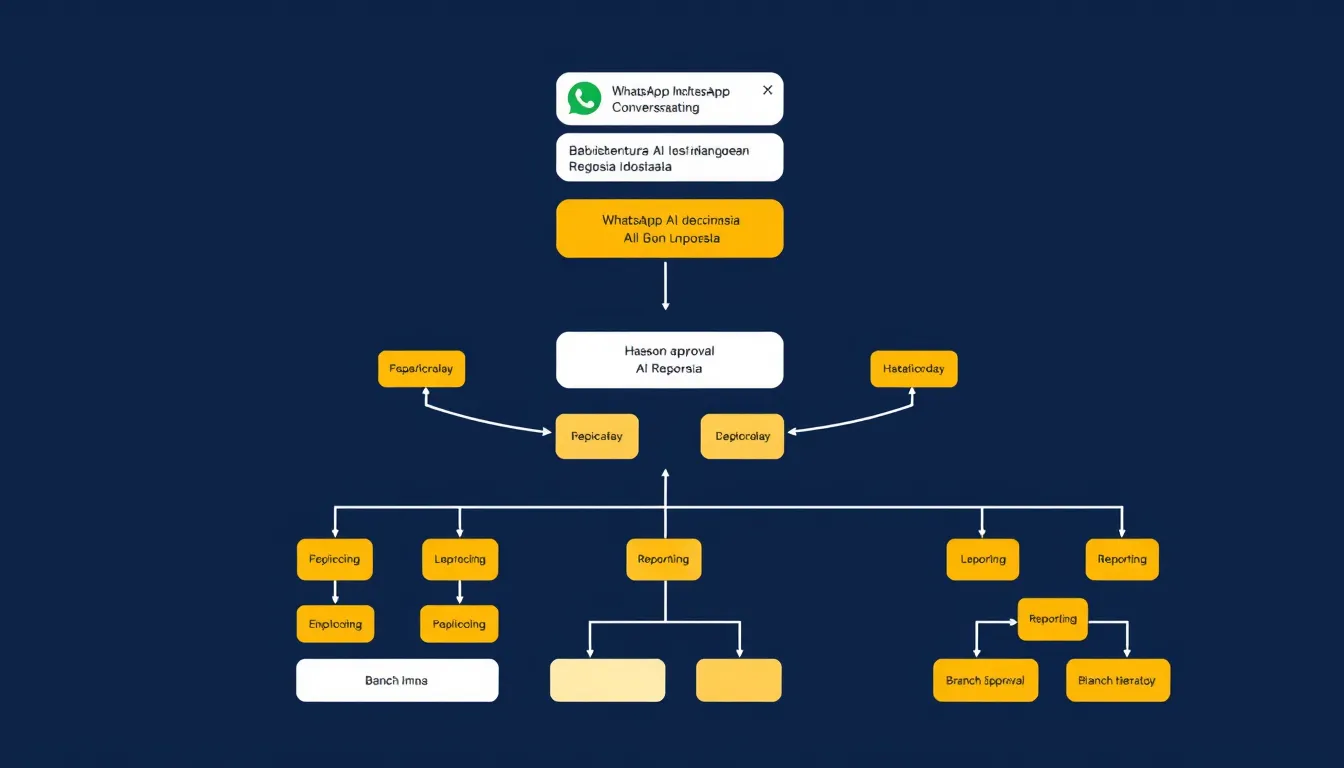
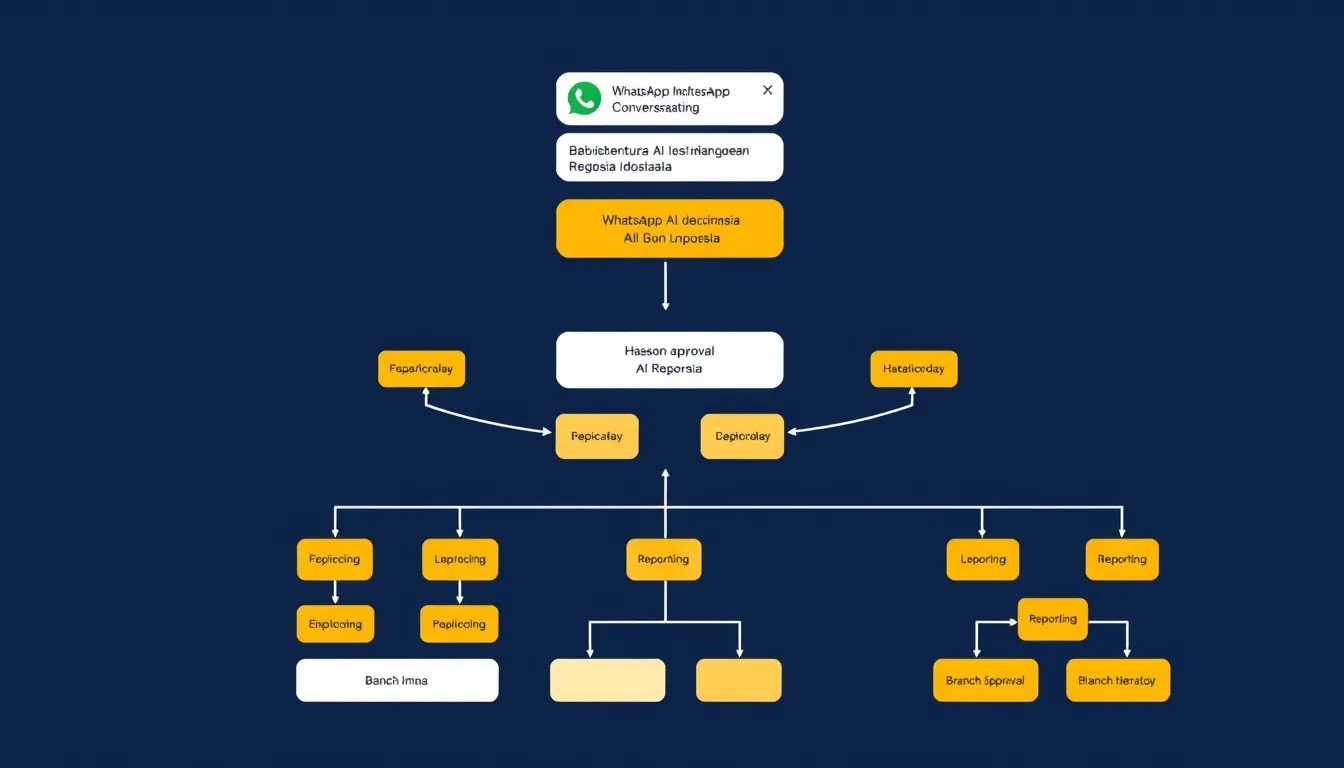
An agentic layer sits on top of your existing core banking, field-officer, and operations stack. It does not replace those systems. It reads the state of accounts from them, reasons about what the right next action is, and either takes that action autonomously (within defined parameters) or surfaces a recommendation to a human for approval.
What an agentic collections AI can do without human approval:
- Send a templated pre-overdue WhatsApp reminder based on a rule the institution has pre-approved.
- Log borrower responses and update account status automatically.
- Route an inbound borrower message to the right officer when a question requires human judgement.
- Generate a branch-level collections activity report at the end of each day.
What should always require a human approval gate:
- Any deviation from a standard payment arrangement.
- Rescheduling or restructuring offers (reconditioning decisions remain with credit officers).
- Escalating an account to legal or external collections.
- Any communication flagged as a potential complaint or dispute.
This distinction matters enormously under OJK supervisory expectations and UU PDP (Undang-Undang Perlindungan Data Pribadi, Indonesia's personal data protection law,). The AI informs and executes; humans decide on material outcomes. That's human-in-the-loop by design, not as an afterthought.
Shadow Mode: The Right Way to Deploy Collections AI
One of the most common mistakes institutions make when adopting AI collections software is deploying it live on day one. That approach creates operational risk and — if something goes wrong — erodes trust with both borrowers and internal stakeholders.
A disciplined deployment runs the AI in shadow mode first. In shadow mode, the system processes real account data and generates the communications and recommendations it would send — but nothing reaches the borrower. Collections supervisors review the AI's output alongside what their team actually did that day.
This does three things:
- Builds institutional confidence by showing the AI's reasoning before it has operational consequences.
- Surfaces edge cases specific to your portfolio — account types, borrower profiles, regional patterns — that need to be configured correctly before go-live.
- Creates an early audit trail of AI behaviour that compliance and risk functions can review.
Shadow mode is not an optional nicety. For any multifinance institution operating under OJK oversight, being able to demonstrate that AI systems were validated before deployment is a basic due-diligence expectation.
Key Capabilities to Evaluate in Any AI Collections Tool
When assessing AI collections software for a multifinance operation in Indonesia, these are the capabilities that determine whether a product is operationally serious:
WhatsApp-native communication
Borrower contact in Indonesia runs on WhatsApp. Any collections tool that treats WhatsApp as an add-on rather than the primary channel will underperform. Look for bidirectional conversation handling — not just outbound blasts — and the ability to detect and route complex borrower responses to a human officer.
Pre-overdue nudge capability
The highest-value intervention in any collections workflow happens before the due date. A well-timed, personalised reminder to a borrower who simply forgot costs almost nothing and prevents an account from entering early arrears. Collections software that only activates after a payment is missed is solving the wrong problem.
Promise-to-pay tracking
Every collections supervisor knows that a promise-to-pay commitment with no follow-up system is almost meaningless. The AI should log commitments, schedule follow-up contacts automatically, and flag broken promises to the right officer — without manual intervention.
Eligibility-gated cross-sell
This is frequently overlooked: a borrower in good standing who has just been reminded of their payment is, statistically, a reasonable candidate for a cross-sell conversation. AI that can assess eligibility — based on your institution's own criteria — and introduce a relevant product at the right moment turns a cost-centre interaction into a revenue touchpoint. This is not a credit decision; the AI surfaces eligibility; a human officer follows up.
Tier-tailored reporting
Branch managers need one view. Regional supervisors need another. The head office risk function needs a third. AI collections software that produces a single undifferentiated report forces humans to do the aggregation manually — which defeats the purpose. Tier-tailored reporting that routes the right data to the right level of the organisation is a basic requirement for any multi-branch operation.
Tamper-evident audit trail
Every borrower contact, every AI recommendation, every human override should be logged in a format that cannot be edited after the fact. This is not just a compliance feature — it protects your institution if a borrower disputes a collections interaction.
How ResolveLink Addresses the Multifinance Collections Challenge
ResolveLink is Aureus Automation's AI-assisted collections and arrears resolution product, currently in early access ahead of commercial launch in Q1 2025. It was designed specifically for the Indonesian regulated lending context — BPRs (Bank Perkreditan Rakyat, Indonesian rural banks) and multifinance institutions operating under OJK oversight.
The product covers the full collections arc: pre-overdue nudges via WhatsApp, structured early-arrears contact sequences, promise-to-pay logging and automated follow-up, and escalation routing with a complete audit-grade record of every interaction. It runs shadow mode as the default deployment posture, moving to live operation only when the institution's compliance and operations teams have signed off.
ResolveLink does not make restructuring or rescheduling decisions. It does not replace the credit officer or collections supervisor. What it does is ensure that no account falls through the gaps between systems, and that every human decision in the workflow is informed by a complete, structured picture of prior contact history.
Consider what this looks like in practice: a 60-branch multifinance company in East Java currently has field officers reconciling three separate systems every morning before they can prioritise their day. ResolveLink consolidates that picture automatically and surfaces a prioritised worklist — with full contact history — before the first call is made.
Getting from Evaluation to Decision
Selecting AI collections software is not a technology decision alone. It touches operations, compliance, IT, and — ultimately — your borrowers. The institutions that deploy these tools successfully tend to do a few things in common: they involve their OJK compliance lead early, they insist on shadow mode before any live deployment, and they define clear human approval gates before a single borrower contact is automated.
If you are at the evaluation stage — comparing what agentic AI collections looks like against your current workflow — the most useful next step is a working session where we map the tool against your actual account lifecycle. Not a slide deck. A conversation grounded in your operation.
Get in touch to see what this looks like in your institution.